The probability of drawing any set of green and red marbles (the hypergeometric distribution) depends only on the numbers of green and red marbles, not on the order in which they appear; i.e., it is an exchangeable distribution.
The Hypergeometric Calculator makes it easy to compute individual and cumulative hypergeometric probabilities. For help, read the Frequently-Asked Questions or review the Sample Problems.
In this post, learn how to use the hypergeometric distribution and its cumulative form, when you can use it, its formula, and how to calculate probabilities by hand. I also include a hypergeometric distribution calculator that you can use with what you learn.
The hypergeometric distribution is a discrete probability distribution that calculates the probability an event happens k times in n trials when sampling from a small population without replacement.
The hypergeometric distribution is implemented in the Wolfram Language as HypergeometricDistribution [N, n, m + n]. The problem of finding the probability of such a picking problem is sometimes called the "urn problem," since it asks for the probability that out of balls drawn are "good" from an urn that contains "good" balls and "bad" balls.
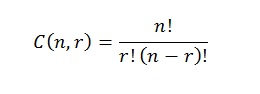
The simplest probability density function is the hypergeometric. This is the most basic one because it is created by combining our knowledge of probabilities from Venn diagrams, the addition and multiplication rules, and the combinatorial counting formula.
The hypergeometric distribution, intuitively, is the probability distribution of the number of red marbles drawn from a set of red and blue marbles, without replacement of the marbles.
One of the main features of the hypergeometric distribution is that it describes scenarios where we draw items without replacing them. This is different from the binomial distribution, which describes situations where we draw items with replacement.
In mathematics, the Gaussian or ordinary hypergeometric function 2F1 (a, b; c; z) is a special function represented by the hypergeometric series, that includes many other special functions as specific or limiting cases.